
Where standard solutions stop carrying the load.
Special applications.
Special requirements.
Special people to build them.
Business-critical enterprise IT — storage, databases, migrations, data center. We build custom. Off the rack is someone else's trade.
We get called when things are on fire. Or after three failed attempts.
Three disciplines. One result.
Project Management
Someone has to own the scope, the people and the money. That is the whole job. Our project managers hold their end of the technical conversation — they spot the gap in a design before it turns into a missed date.
Infrastructure Consulting
Someone has to decide what the thing is actually built from. Vendor logos do not decide that. Fan-in ratios, paths and latencies do.
Technical Specialists
Someone has to put hands on it. Cabling, parameters, limits — the unglamorous half where projects actually die.
Experts United
All three. Or one. Or ours working next to yours. Your call, not our package.
Who we deal with
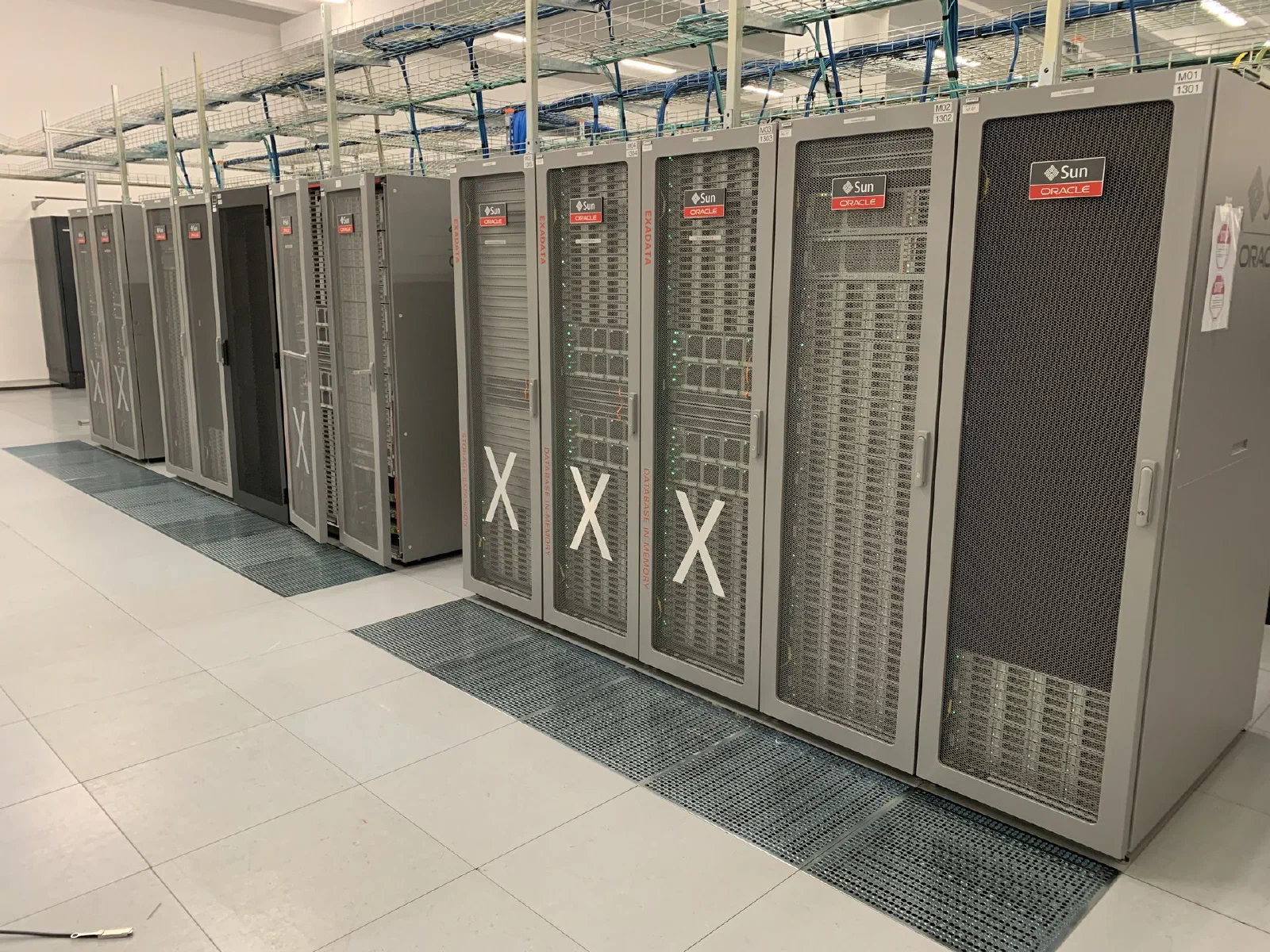
Our customers run eight Exadatas for a single project. They built two petabytes on NVMe over Fabrics back in 2018. They have a mainframe — and a mainframe is business-critical by definition.
Government agencies and publicly traded companies, with few exceptions. Not because we picked them, but because that is where the systems sit whose failure actually hurts.
We do not name customers. We do name numbers.
How we work
Hand-picked seniors. We have no juniors.
We get our hands into the systems nobody else will touch. And we say so when something is badly built — even when nobody wants to hear it. That is uncomfortable. It is exactly why we get called.
On the migration of the largest data warehouse at a telecommunications provider, the customer's other service providers did not want to go along with much of what we had proposed — too unusual, not standard. It was built anyway. In the end the migration was done in a fraction of the window planned for it.
Sometimes it goes the other way. Two service providers had already failed at commissioning, the hardware was sitting there — and it was not even wired up correctly. We rebuilt it, picked up the requirements that had changed in the meantime, and told the customer the products did not fit the task. The manufacturer was the right one; the product was not. Nobody buys a convertible when what they need is a station wagon — same manufacturer, wrong vehicle for the load.
Spotted it. Said it. For four months. Then the manufacturer was flown in from overseas, and our services were no longer required. Twelve months later the hardware was still not in service.
We do not hunt for projects. People come to us once the obvious answer is already off the table.
Finished means: without us
A project is finished when the customer can run it without us. That is decided during the build, not at handoff — which is why we build together with operations rather than beside them. The teaching happens along the way, on the real system, while it takes shape.
That is self-interest. Only the ones who finish have capacity for the next mess nobody else will touch. And anyone who stays fifteen years might as well go on the payroll.
Four years of project runtime is fine. At the end we leave with a lump in our throats — and we are glad to come back five years later for the next thing.
A data warehouse we designed for a four-year service life is still running almost unchanged ten years later. The planned refresh never happened. The customer has been running it all that time.